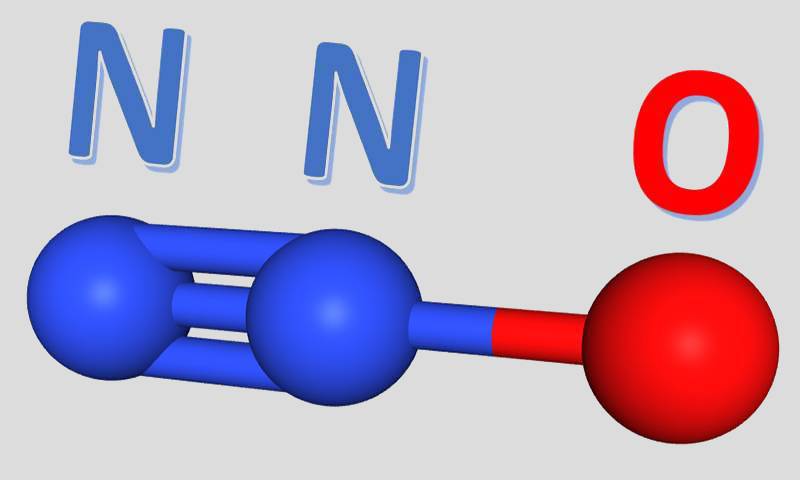
What Is Nitrous Oxide?
Nitrous oxide is also known as laughing gas. It is a colorless gas that is about 50% heavier than air and has a slightly sweet taste. It is not flammable but supports combustion. It is widely used as a food additive and as a propellant in food-grade aerosols. It is also used in rocket engines, internal combustion engines, and as an inhalation anesthetic. Nitrous oxide is very popular on the market—do you know how it’s produced?
4 Methods for Producing Nitrous Oxide
1. Reaction of zinc with dilute nitric acid.
2. Reaction of hydroxylamine dichloride (NH₂OH HCl) with sodium nitrite (NaNO₂).
The above two methods are used only in laboratories.
3. Separation from the off-gas of adipic acid production.
4. Continuous thermal decomposition of high-purity ammonium nitrate (NH₄NO₃).
(NiOx Technical Advisory Group Report.pdf (usda.gov))
Methods 3 and 4 are used for mass production. Here, we will provide detailed information on these two methods.
Separation from Adipic Acid Off-Gas
Regarding separation from adipic acid off-gas: This method is used because the adipic acid process unit produces nitrous oxide as a byproduct. Generally, approximately 0.28 metric tons of nitrous oxide are generated per metric ton of adipic acid, with a nitrous oxide content of nearly 50% (wt), making it highly valuable for recovery from the off-gas.
The method for producing high-purity nitrous oxide using adipic acid production tail gas involves the following steps: (1) Absorption pretreatment process:
The tail gas generated from the adipic acid process enters an absorption tower, where the absorption liquid at the bottom of the tower absorbs most of the CO₂, NO₂, and H₂O.
(2) Low-temperature distillation process: The gas stream exiting the adsorption equipment enters a low-temperature distillation tower. High-purity dinitrogen monoxide is produced using a low-temperature purification chromatographic column.
(https://patents.google.com/patent/CN105110304B/en)
The dinitrogen monoxide produced by this method is typically used in the electronics industry. It is not approved for food-grade applications.
Thermal Decomposition of Ammonium Nitrate (NH₄NO₃)
Nitrous oxide is produced by carefully heating ammonium nitrate at around 250°C, where it decomposes into nitrous oxide and water vapor:
NH₄NO₃ → 2H₂O + N₂O
Ammonium nitrate is decomposed in a furnace to yield a mixture of nitrous oxide and superheated steam. Impurities are also produced, including ammonium nitrate fumes, nitrogen, and other nitrogen oxides. The steam and impurities are removed through sequential scrubbing with water, sodium hydroxide, and sulfuric acid. Traces of nitrogen present are removed by venting them from the top of the nitrous oxide storage vessel after compression by a compressor.
The nitrous oxide produced by this method has been approved by the WHO, FDA, and GB food additive standards.
(https://www.accessdata.fda.gov/scripts/cdrh/cfdocs/cfcfr/CFRSearch.cfm?fr=173.360)
Regarding the food additive nitrous oxide (nitrous oxide) sold by our company, in accordance with Article 1 of the National Food Safety Standard GB 1886.350—2021 “Food Additives—Nitrous Oxide,” which states: “This standard applies to the food additive nitrous oxide obtained through the thermal decomposition of ammonium nitrate as a raw material.”